Autonomous Materials Laboratories
The materials needed for extreme environments span enormous composition, processing, and testing spaces that cannot be efficiently explored using conventional sequential experimentation. At STARS Lab, we develop autonomous materials laboratories that integrate robotics, advanced characterization, high-throughput experimentation, and AI-guided decision-making to accelerate materials design, testing, and qualification. Physical experiments are connected through digital threads that preserve material history, processing conditions, measurements, uncertainty, and provenance, enabling autonomous systems to learn from each experiment and determine what to test next. These platforms are designed to accelerate the discovery and development of materials for demanding applications including hypersonics, naval and corrosion environments, nuclear fission and fusion, aerospace, and other extreme environments. Our goal is to transform materials development from sequential trial-and-error into a closed-loop, data-driven process that autonomously designs, tests, learns, and validates.
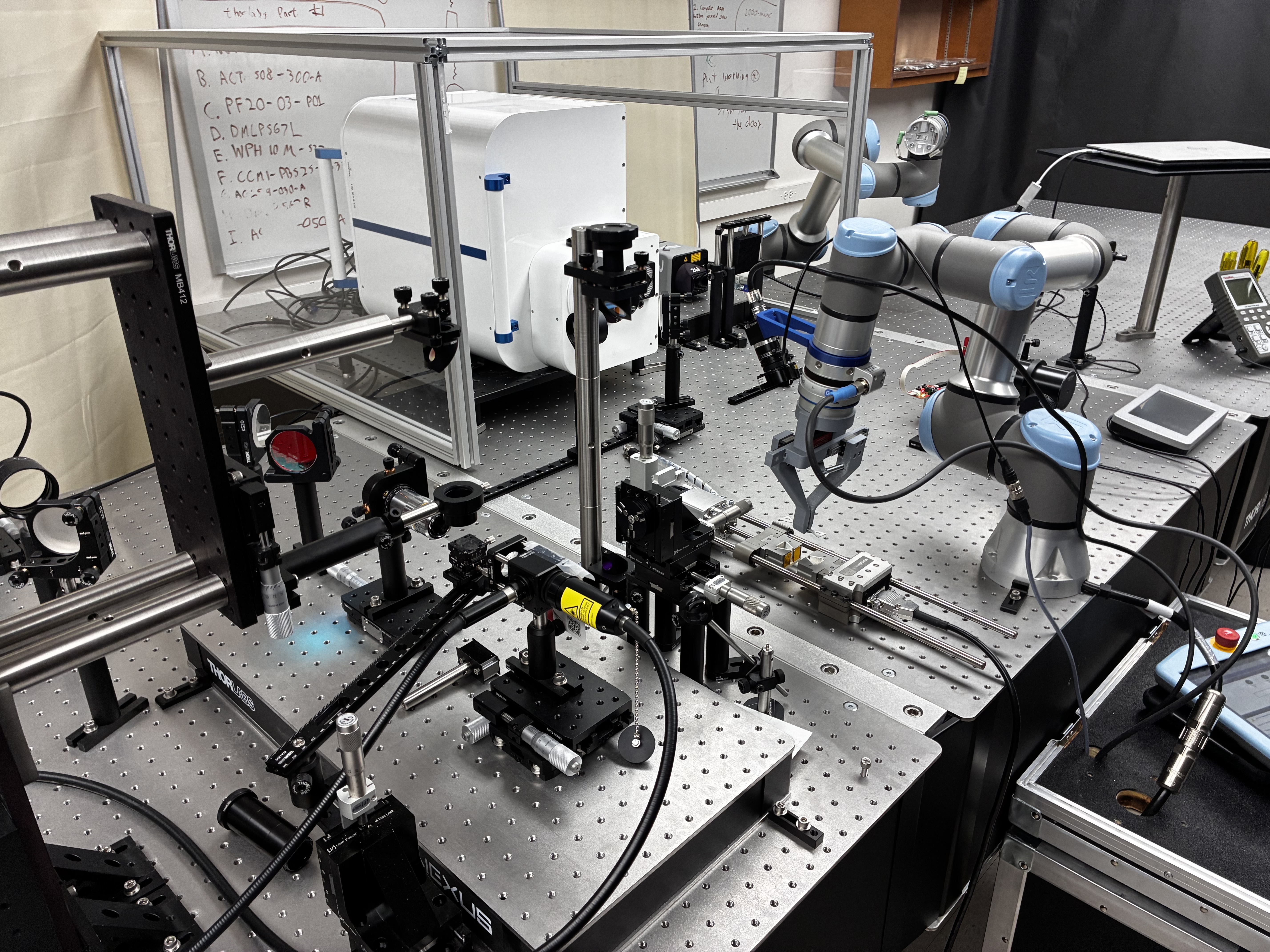
Robot Arms Autonomously Testing Materials: [STARS Lab]
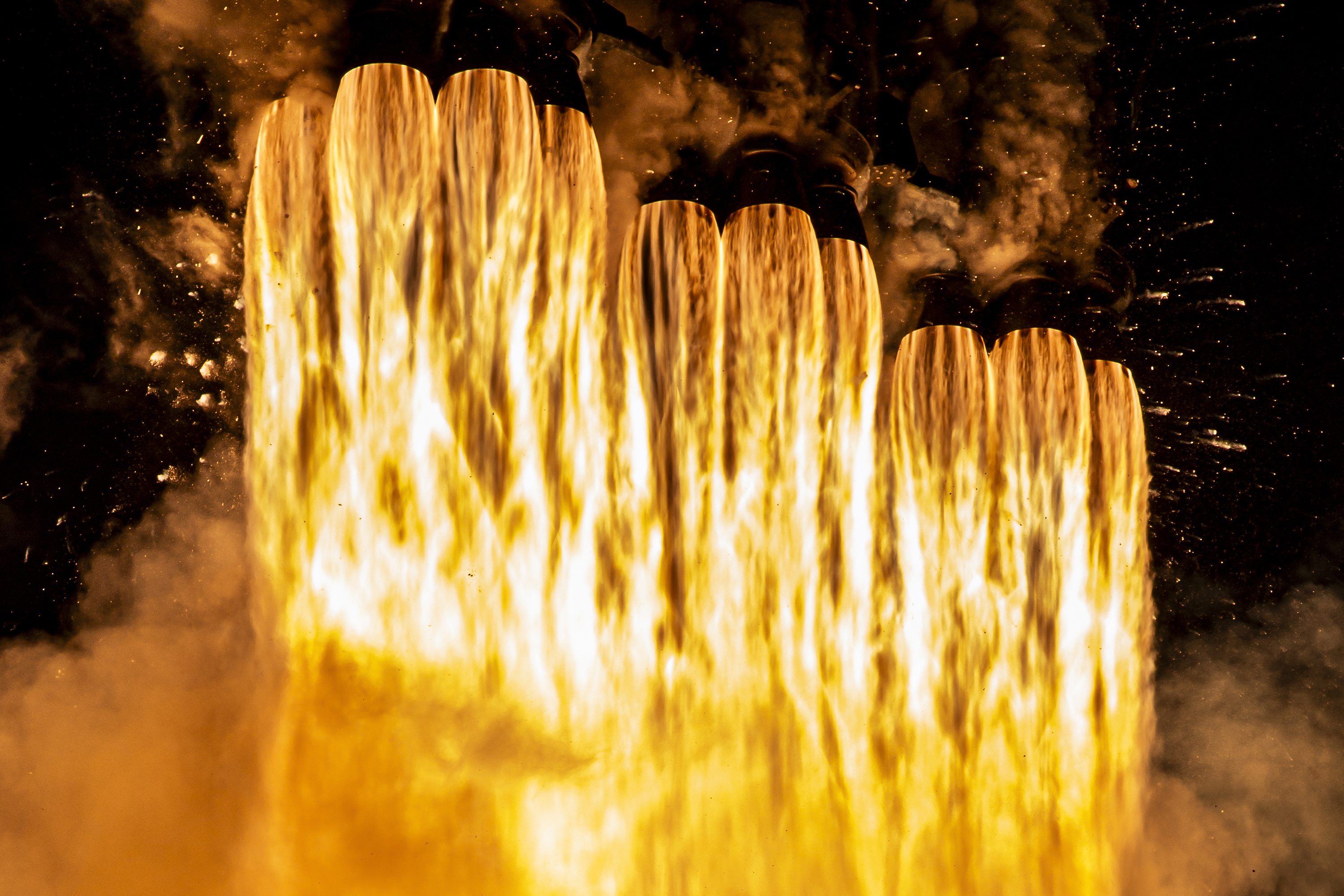
Merlin Rocket Engines Firing for Roman Telescope Launch: [NASA Image Archive]
Deformation Mechanisms of Structural Alloys
Structural materials in extreme environments must endure intense mechanical and thermal stresses over extended periods. At STARS Lab, we design novel materials/alloys and investigate how they respond to high temperatures, cyclic loading, and extreme strain rates to improve their long-term performance and reliability. Our research focuses on understanding the fundamental mechanisms of plasticity, creep, fatigue, and fracture—key factors that determine material lifespan in aerospace, energy, and defense applications. By analyzing how materials deform under these conditions, we develop strategies to design new materials that can enhance their structural integrity, optimize performance, and ensure they can withstand the rigorous demands of next-generation technologies.
Particle Impact Bonding and Mechanics of Advanced Materials
At STARS Lab, research focuses on understanding particle–surface interactions under extreme impact conditions to enable next-generation additive manufacturing and surface engineering technologies. Using the Laser-Induced Particle Impact Test (LIPIT) platform, individual microparticles are accelerated to ultrahigh velocities while their impact response is captured with high spatial and temporal fidelity. These experiments reveal how particles deform, adhere, erode, or rebound during impact, providing insight into bonding physics and material behavior at extreme strain rates. The resulting measurements are used to study dynamic mechanical response, optimize cold spray and related deposition processes, and design structural materials capable of operating in harsh aerospace and energy environments.
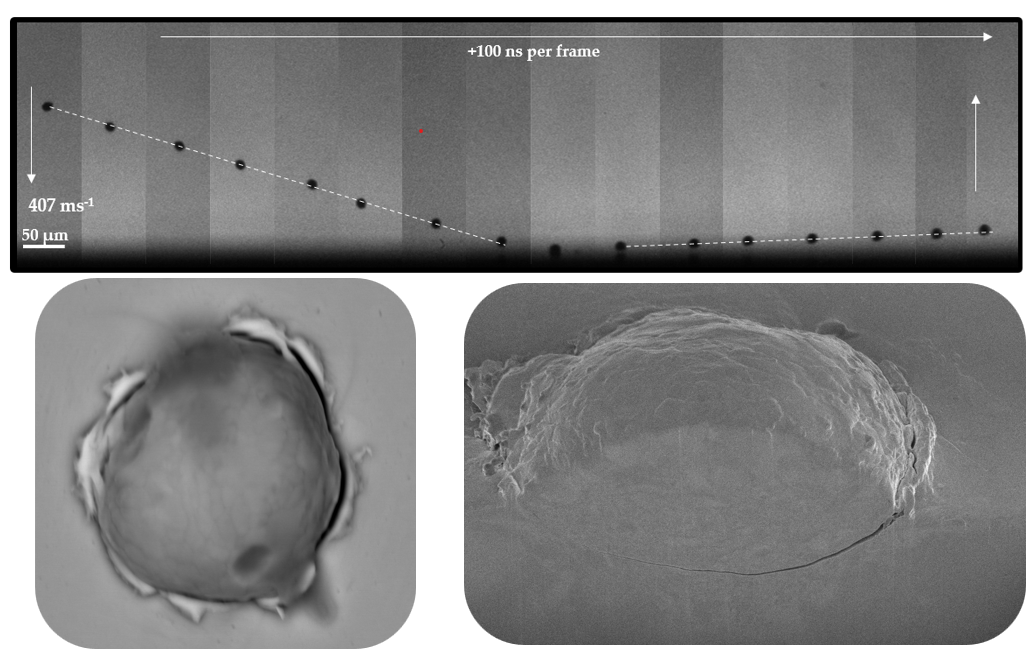
Particle Impact Cratering After LIPIT Testing: [STARS Lab]
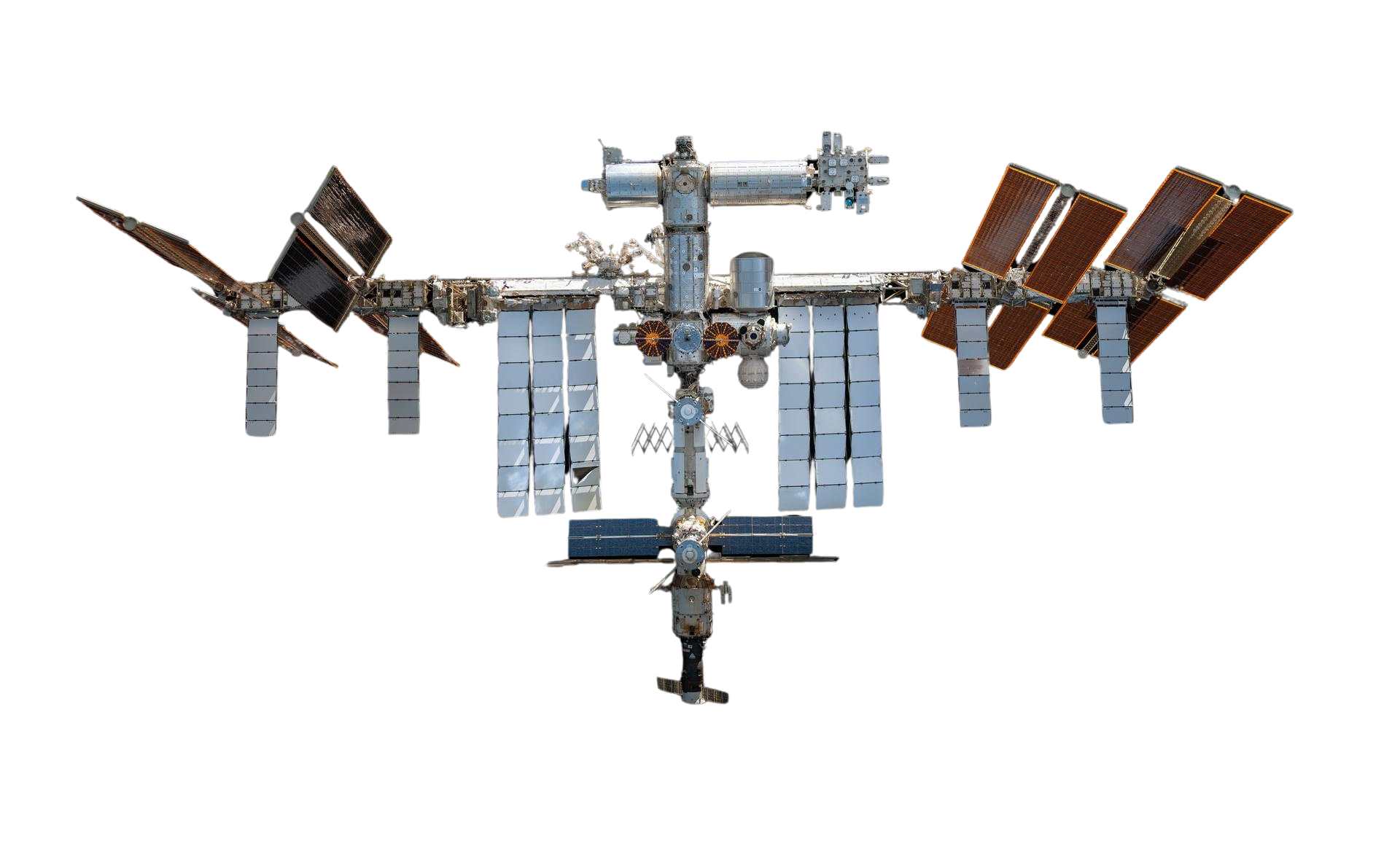
International Space Station: [NASA Image Archive]
In-Space Manufacturing, Regolith Processing, and In-Situ Resource Utilization (ISRU)
Sustained exploration of the Moon, Mars, and beyond will require the ability to manufacture, repair, and build using resources available in space rather than relying on Earth-based resupply. At STARS Lab, we investigate in-space manufacturing, repair, and regolith-based ISRU across orbital and planetary environments. Our research examines how reduced gravity, vacuum, extreme temperatures, and planetary materials influence processing, microstructure evolution, bonding, and mechanical performance. We study metal additive manufacturing and repair in microgravity, as well as the processing and additive manufacturing of lunar and Martian regolith for landing pads, habitats, shielding, and other planetary infrastructure. We also investigate regolith mechanics and plume–surface interactions to understand and mitigate erosion and ejecta during planetary landing and surface operations. Our goal is to establish the fundamental materials and manufacturing science needed to make, repair, and build with resources available beyond Earth.
Our Sponsors